Espigoladors
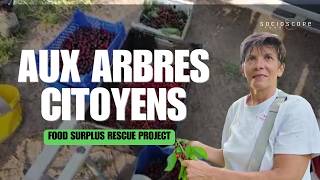
Espigoladors is a Barcelona-based foundation that works to reduce food losses and waste, promote the right to healthy and sustainable food for all, and generate employment and training opportunities for people at risk of social exclusion. The organisation takes its name from the historical practice of gleaning — entering fields after the main harvest to collect produce left behind because it does not meet aesthetic or size standards set by major retailers, or because market prices make harvesting economically unviable for farmers. Founded in 2014 in response to the social and economic crisis that followed 2008, the organisation operates across Catalonia, with a network of around 200 partner farmers in agricultural areas near Barcelona and in regions including Maresme, Girona, Tarragona, and Lleida.
The foundation coordinates a volunteer pool of over 3,000 registered individuals who carry out gleaning sessions in the fields, recovering fruits and vegetables that are then distributed within 24–48 hours to a network of social entities and food banks serving families in food poverty. Partner farmers sign formal agreements with the organisation, and social entities collect produce directly from the fields using their own vehicles. Produce that cannot be distributed fresh is processed in the foundation's production centre — a 1,000 m² facility in the Prat de Llobregat — under the brand Es Imperfect, which transforms surplus and imperfect fruit and vegetables into fully natural, predominantly vegan preserved foods including jams, vegetable pâtés, creams, sofrito, and compote. The production centre also operates a three-year labour insertion programme in which people referred by social services work as kitchen assistants and receive training to enter the food industry.
The foundation has an internal research team of three specialists in sustainability and food loss, which generates data on the causes and scale of primary-sector food losses and participates in European research collaborations, including a multi-partner methodology project for quantifying and reducing food losses across Europe. The organisation also runs urban food recovery activities, collecting bitter oranges from city street trees in multiple districts of Barcelona and in around 20 other Catalan municipalities, processing them into marmalade that is distributed free of charge through local social entities, with each batch labelled by district. A related urban food recovery effort is being developed with funding from a private Italian foundation to extend this model to additional territories over three years.
The foundation's income comes approximately 70–80% from public grants at Catalan, national, and European levels, with the remaining share from fee-based services including awareness campaigns commissioned by local governments, corporate team activities, school workshops, and the sale of Es Imperfect products. The organisation also offers contract processing services to small and medium-sized producers who wish to transform their own surplus under their own brand. It is actively engaged in advocacy for a national food waste law in Spain and works with other organisations and bodies including WWF to build an evidence base for relaxing retail aesthetic standards for fresh produce.
Anna Gras