Finca Laguna Verde (Stuckey)
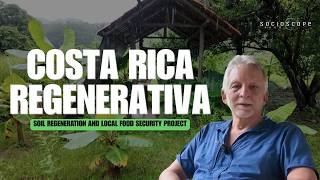
Finca Laguna Verde (Stuckey) is an 80-hectare family-owned dairy farm located in Monteverde, Costa Rica, that has operated under regenerative agriculture principles for seven years. The farm milks approximately 30 cows at any one time, producing around 200 kilograms of milk per day, all of which is sold to a local cheese factory. Over the course of the transition from conventional to regenerative management, the farm reduced its use of grain concentrates from 165 fifty-pound bags per month to 30, eliminated chemical fertilizers and ivermectin, and reconfigured its pasture system from roughly 60 paddocks to approximately 160 smaller ones, extending rotation periods to between 55 and 75 days depending on the season. The farm is currently sequestering 302 tonnes more carbon into its soils than its cattle emit in greenhouse gases, and holds carbon-neutral certification under Costa Rica's nationally appropriate mitigation actions framework. It also carries the Costa Rican Blue Flag ecological certification, which it has maintained for five consecutive years.
Beyond dairy, the farm produces organic coffee and organic garden vegetables, some of which are sold locally including to a restaurant, with the remainder consumed on-site. It also raises tilapia, rabbits, and honeybees, currently for self-consumption, with plans to develop local markets for these products. The farm maintains approximately one hectare of coffee and retains areas of woodland that function as windbreaks and biological corridors. The farm employs three full-time and two part-time workers. It is structured as a family-owned corporation under Costa Rican law and is currently transitioning its herd genetics away from Jersey cattle toward the Senepol breed, which offers greater tick resistance and heat tolerance in a tropical climate.
The farm conducts soil, organic matter, carbon, and nutrient analyses as part of its land management and applies mountain microorganism preparations to restore soil biology. Long-term biological studies are conducted on the farm by external researchers, including bird counts and documentation of altitudinal species migration linked to climate change. The farm works with the local Ministry of Agriculture extension service and hosts visits from universities and educational organisations, including a local institute, to support research and training in regenerative agriculture and climate change impacts.
The farm operates at a financial loss and supplements its income through short-term rental of an on-site property. To address this, the farm is working to develop higher added-value product lines and is involved in forming a local non-profit farmers association. The association is intended to support collective certification, market access, and consumer education, and to help participating farms sell regeneratively produced goods at prices that reflect the full cost of production.
Sarah Stuckney